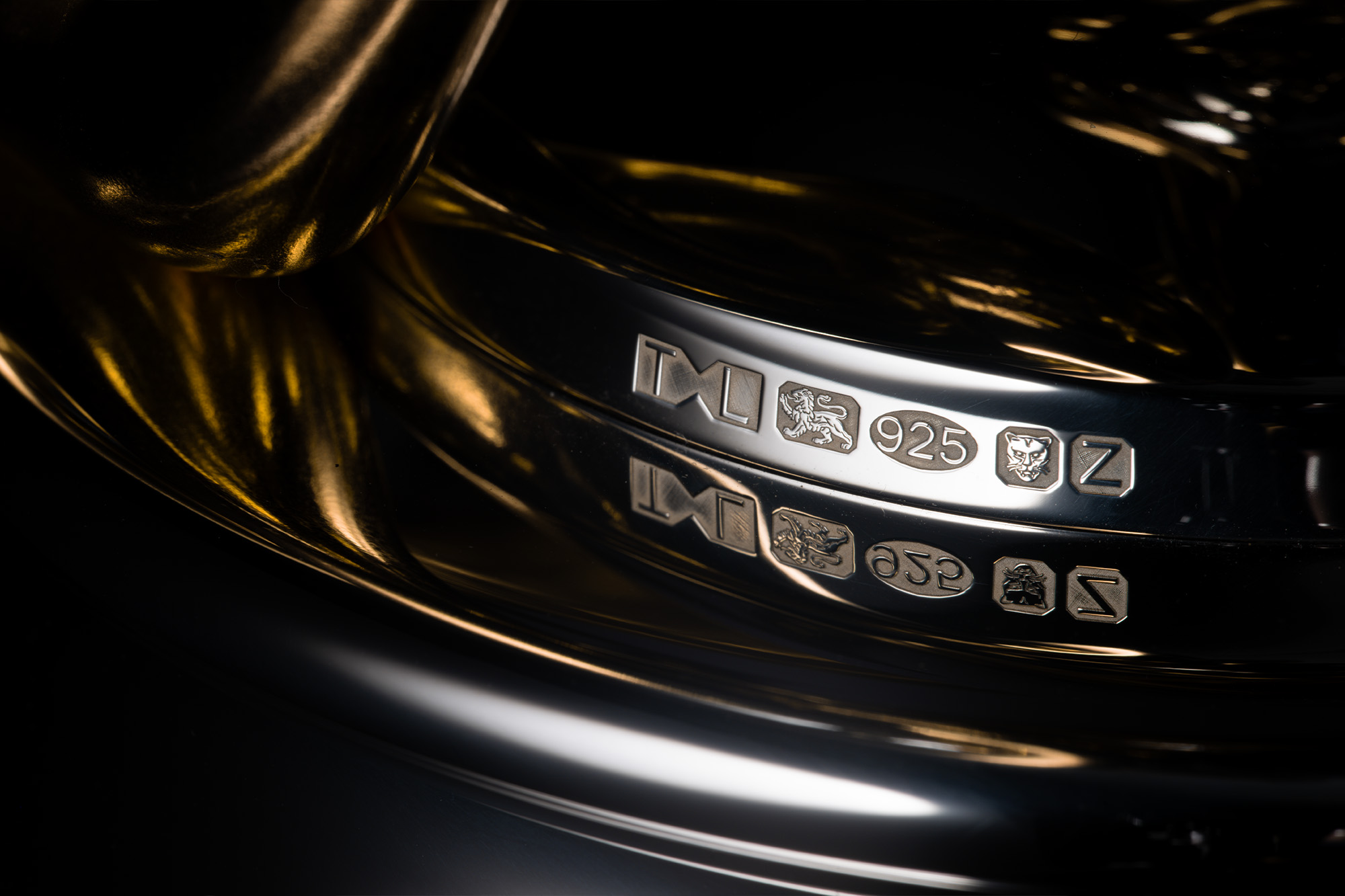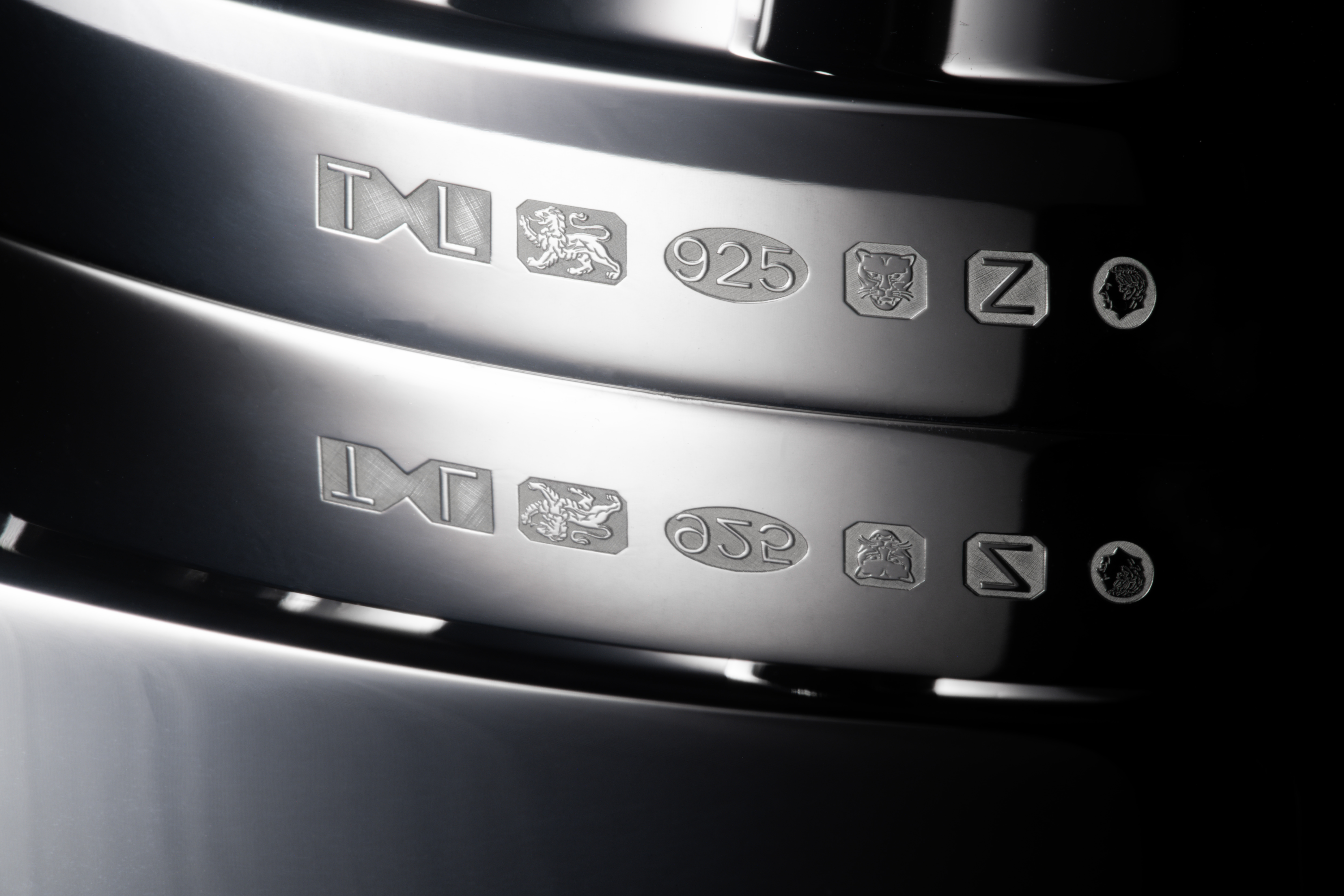
Small in size, but rich in history, the Leopard’s Head is one of the most recognisable symbols in British hallmarking. Also known as the London Town Mark, it identifies precious metalwork assayed in London. It is part of a wider hallmarking system established more than seven centuries ago, recording where a piece was tested in order to prove its metal purity.
For Thomas Lyte, this small mark carries particular significance. As English designers and makers working from our London workshops, it connects our contemporary work with the long tradition of British goldsmithing and silversmithing. But why a leopard? And how did this small mark become such an enduring symbol of London craftsmanship?
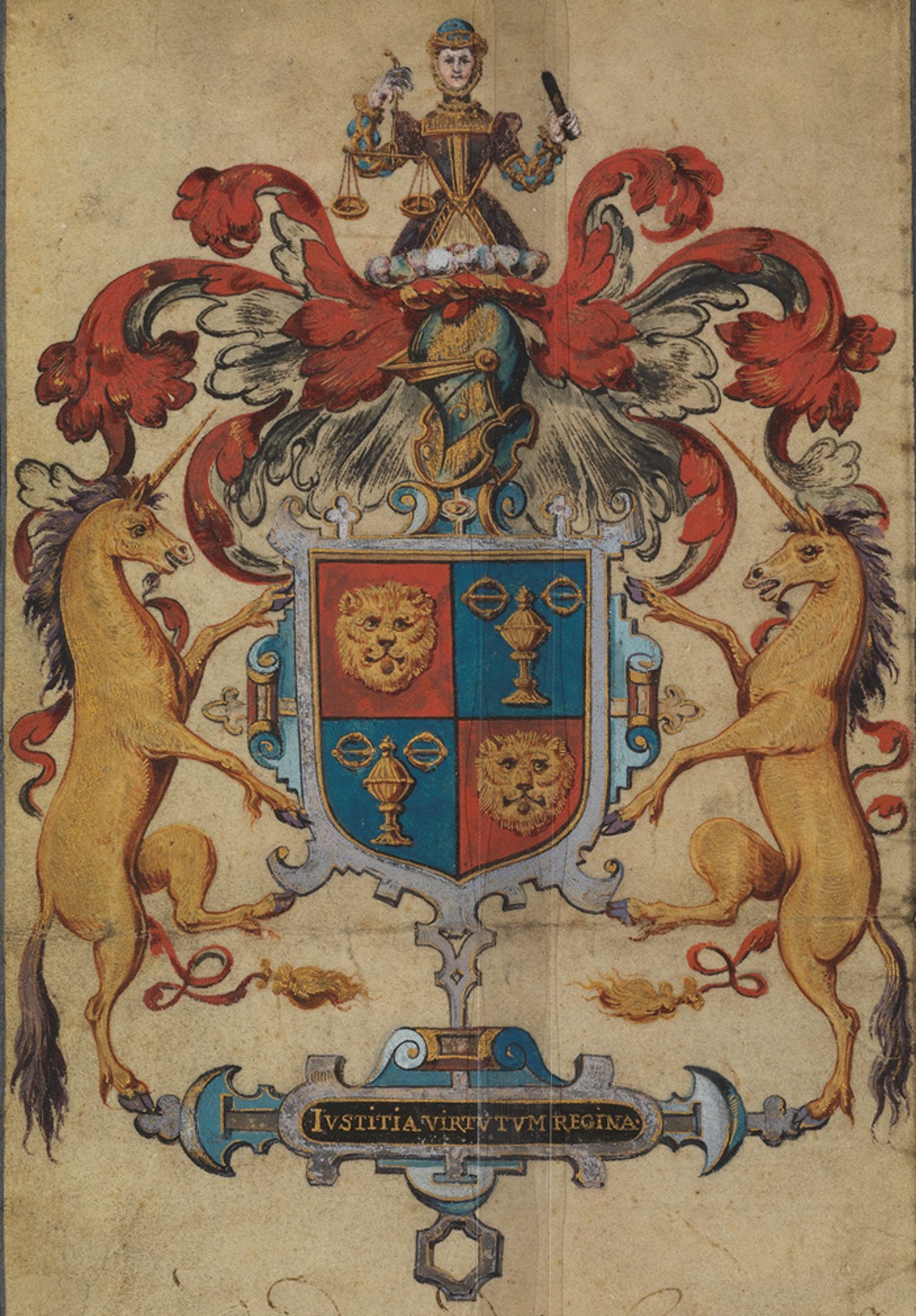
Above image: First Official Grant of Arms (1571), courtesy of the Assay Office London
The story begins in 1300, when Edward I introduced the first statutory hallmarking system in Britain. Under his statute, precious metalwork was required to be tested and marked with the King’s mark, giving buyers confidence that the metal had been properly assayed and judged genuine.
The name Leopard’s Head has its roots in medieval heraldry. At the time, a lion depicted facing the viewer was known as a ‘leopart’. The mark we now call the Leopard’s Head is therefore, historically, a lion’s face viewed from the front. Its design also reflects England’s royal heritage, deriving from the three lions passant guardant of the Royal Arms.
In 1327, the Goldsmiths’ Company received its first Royal Charter, formally establishing its position within the trade. In 1363, individual maker’s marks were required alongside the King’s mark, allowing responsibility for a piece to be traced back to the craftsman who made it. The hallmark was becoming more than a symbol. It was becoming a system of trust and accountability.
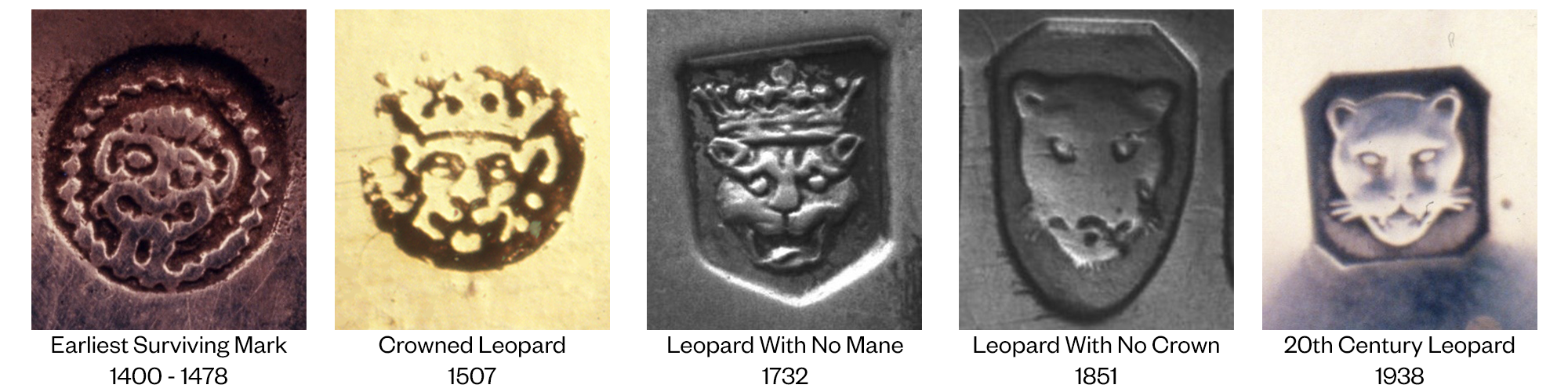
Above image: Timeline of the Leopard Mark (1400-1938), courtesy of the Assay Office London
The Leopard’s Head has changed considerably over the centuries, evolving alongside the laws and standards governing precious metalwork. In 1478, a permanent assay office was established at Goldsmiths’ Hall. Around this period, the Leopard’s Head was crowned as the gold standard changed to 18 carats, while the annual date letter system was introduced. In 1544, the lion passant was introduced as the standard mark for sterling silver. The Leopard’s Head subsequently became the distinctive town mark of London, identifying where a piece had been assayed.
Then came one of the most dramatic chapters in its history. In 1697, concerns over the melting of silver coinage led to the introduction of the higher Britannia standard. The crowned leopard’s head was replaced by a lion’s head erased and the seated figure of Britannia.
In 1720, the traditional sterling standard was restored, although Britannia silver remained available as an alternative. The crowned Leopard’s Head returned. By 1739, the design had been simplified again, with the crown remaining but the mane being removed.
The integrity of the system was taken extremely seriously. In 1757, counterfeiting hallmarks became a felony punishable by death – a striking indication of the importance placed on protecting the authenticity of precious metalwork.
The final major transformation came in 1822. The crown was removed, leaving the simpler uncrowned Leopard’s Head without a mane that we recognise today. The change was made without public announcement and is thought to have helped identify counterfeiters who continued using older versions of the mark.
By then, Britain’s hallmarking network was expanding beyond London. New assay offices developed their own distinctive town marks, making it possible to identify where a piece had been assayed. The Leopard’s Head therefore became firmly associated not simply with precious metalwork, but with London itself.
| Assay Office | Town Mark | Status |
|---|---|---|
| London | Leopard’s Head | Active |
| Birmingham | Anchor | Active |
| Sheffield | Rose | Active |
| Edinburgh | Three-towered castle | Active |
| Glasgow | Tree, bird, bell and fish | Closed 1964 |
| Chester | Three wheatsheaves and sword | Closed 1962 |
| Exeter | Three-towered castle | Closed 1883 |
| Newcastle | Three castles | Closed 1884 |
Today, a hallmark can be easy to overlook. Often only a few millimetres wide, it sits discreetly on the surface of a piece. Yet behind that small impression lies a system of testing, legislation and accountability that has endured since 1300. The Leopard’s Head does not simply tell us about the metal. It tells us about provenance. It identifies London as the place of assay and connects a contemporary piece with a tradition of craftsmanship that has shaped the city for centuries.
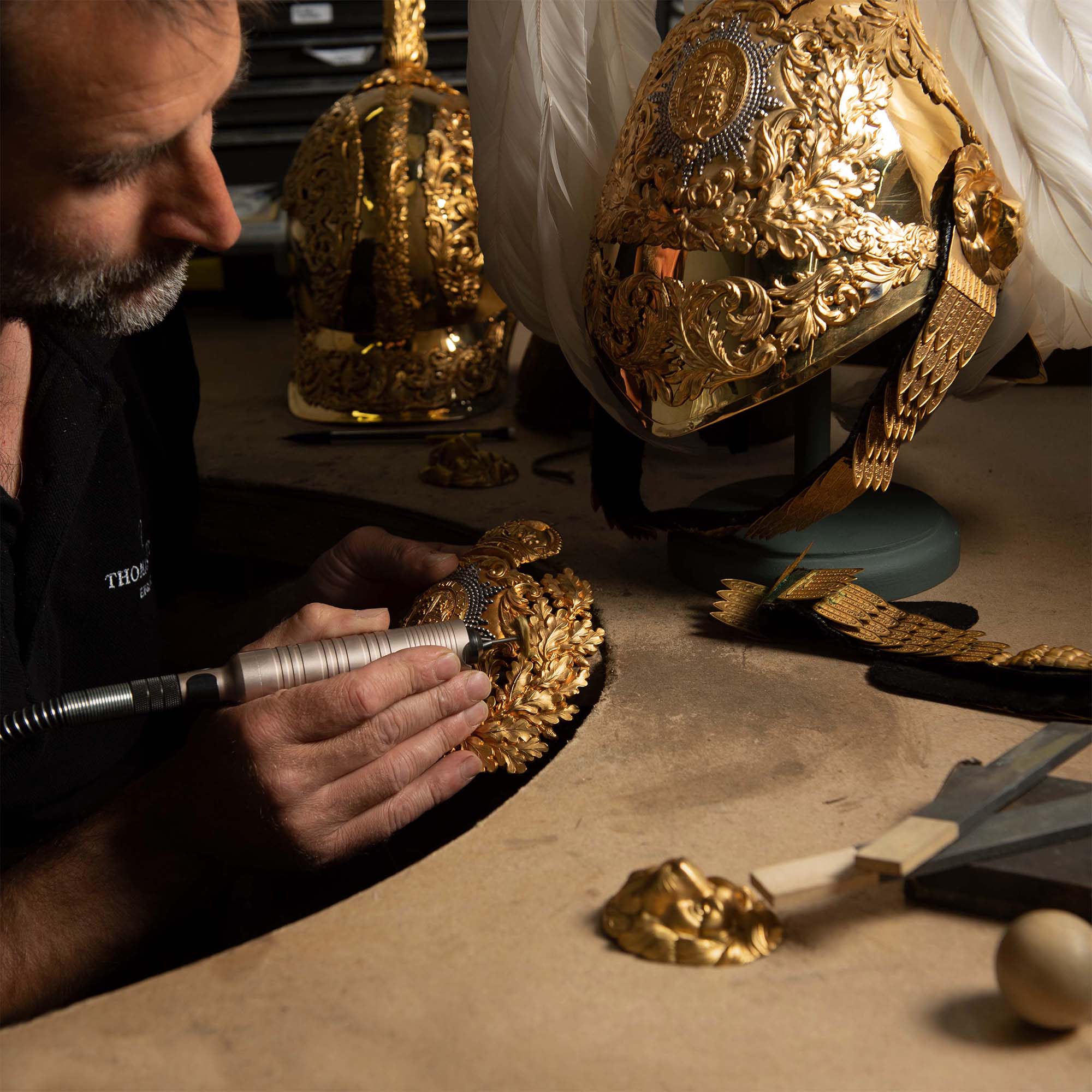
For Thomas Lyte, that connection is particularly meaningful. Our work is designed and made by English craftsmen in our London workshops, continuing a tradition of British goldsmithing and silversmithing while creating contemporary trophies, awards and silverware for some of the world’s most prestigious organisations and events.
When the Leopard’s Head appears on a Thomas Lyte piece, it provides a discreet link between the work we make today and the London goldsmithing tradition that came before us. Marks, standards and techniques have all changed and evolved but the principle remains the same: trust in the integrity of the work.
Read about our press mentions and awards for the project
We have selected a number of case studies that demonstrate the broad range of our capabilities designing and making in precious metals.